
10 Ways to Explore Ellis Island in New York City
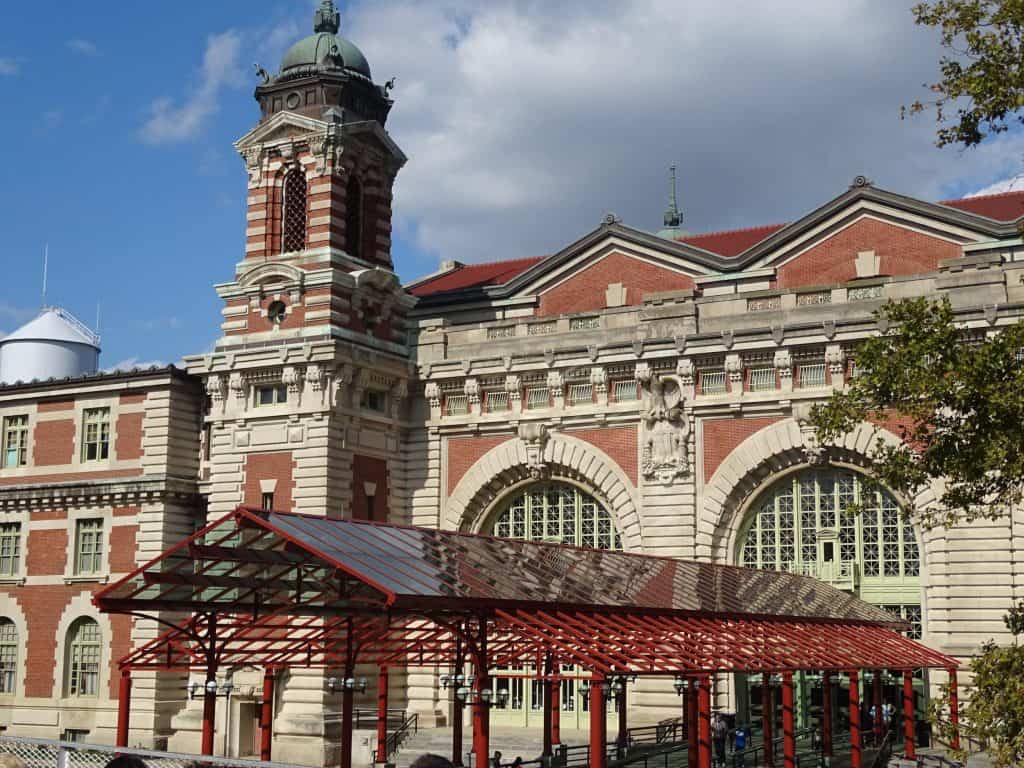
Following Annie Moore, the first person processed in 1892, over 12 million people arrived at Ellis Island between 1892 until 1954, when the immigrant office was closed. The complex sat in disrepair until the National Park Service took over in 1965 and reopened it as an immigration museum. Now, over two million visit the complex each year.
Getting There:
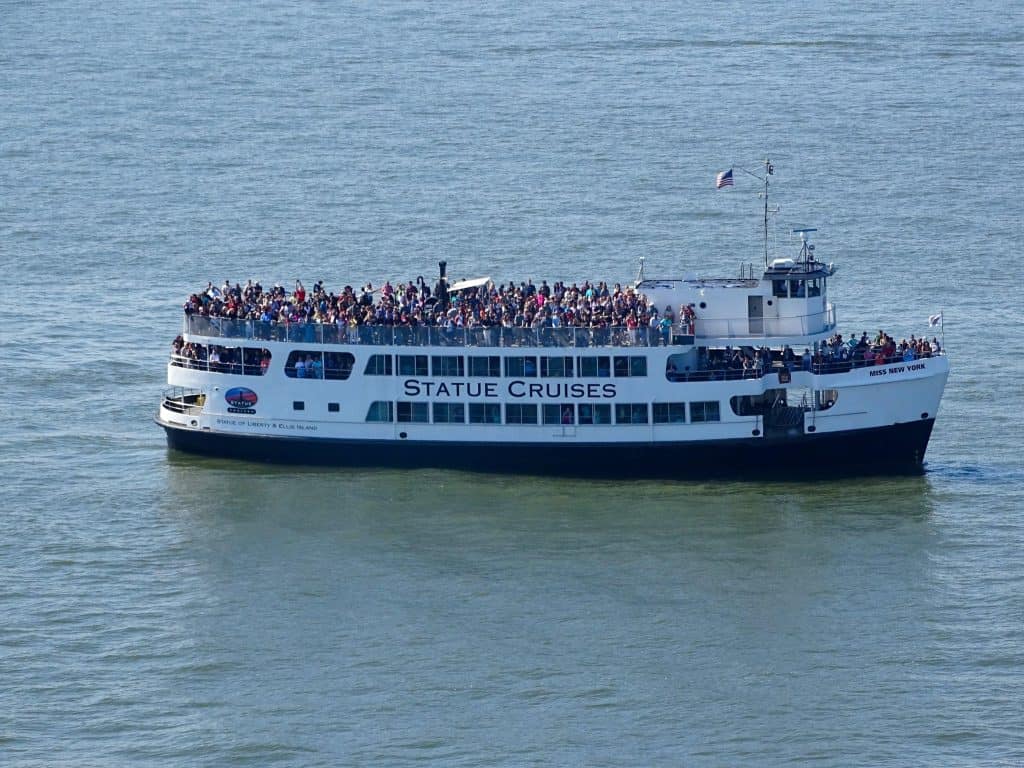
- The easiest way to get to the island is via a Statue Cruises ferry. There are some private charters, but Statue Island Cruises is the official transportation. You can take a ferry from Battery Park (New York) or Liberty State Park (New Jersey). The New Jersey port is often less crowded, meaning you’re more likely to get a seat, and a view, on the ferry.
- Ferry boats have three levels, restrooms, and concessions. The top level is the most popular (at least on a sunny day) and offers the best views; the second level has indoor and outdoor spaces, but only seating indoors. The starboard side of the ferry is best for photos of the statue in the background when go get close to Liberty Island.
- It takes about 20 minutes to get from Battery Park (New York) to Liberty Island; 10 minutes from Liberty Island to Ellis Island; 25 minutes from Ellis Island to Battery Park.
- Make time to visit Liberty Island and explore the Statue of Liberty. Read my tips here.
- If you travel through lower Manhattan, you’ll enter through Castle Clinton National Monument. Take a moment to check out the exhibit on the history of the island and collect a passport stamp for your National Parks passport. There are events frequently offered at the monument (check here), tons of green space and areas to picnic and enjoy the outdoors, and many festivals, pop up shops, and street vendors.
- I strongly recommend purchasing tickets online ahead of time. You can purchase tickets at booths inside Castle Clinton, but on the day we visited, the lines were long.
Traveling with Kids:
- Security: You’ll pass through a security checkpoint before you board the ferry and you’ll need to empty pockets, take off belts, and put all packages and bags through a scanning machine.
- Restrooms: There are restrooms located inside Castle Clinton before you board the ferry, on the ferry (although I would avoid these) and in several locations throughout Ellis Island.
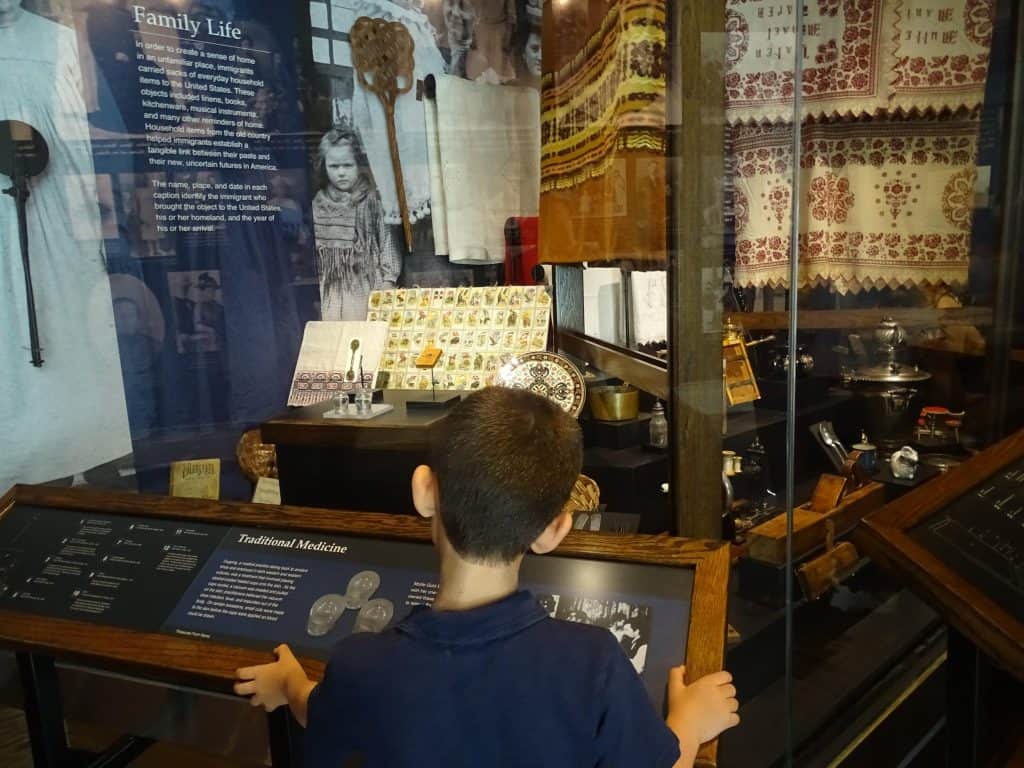
- Bring the stroller for smaller children. There are three floors of exhibits in the main area of Ellis Island which cover a lot of ground; there are elevators and escalators available. Most the exhibits are not super child friend, so younger children who cannot read might not be as engaged as school aged children. Upper elementary and older students will be fascinated by the stories, personal items, timelines, and film footage.
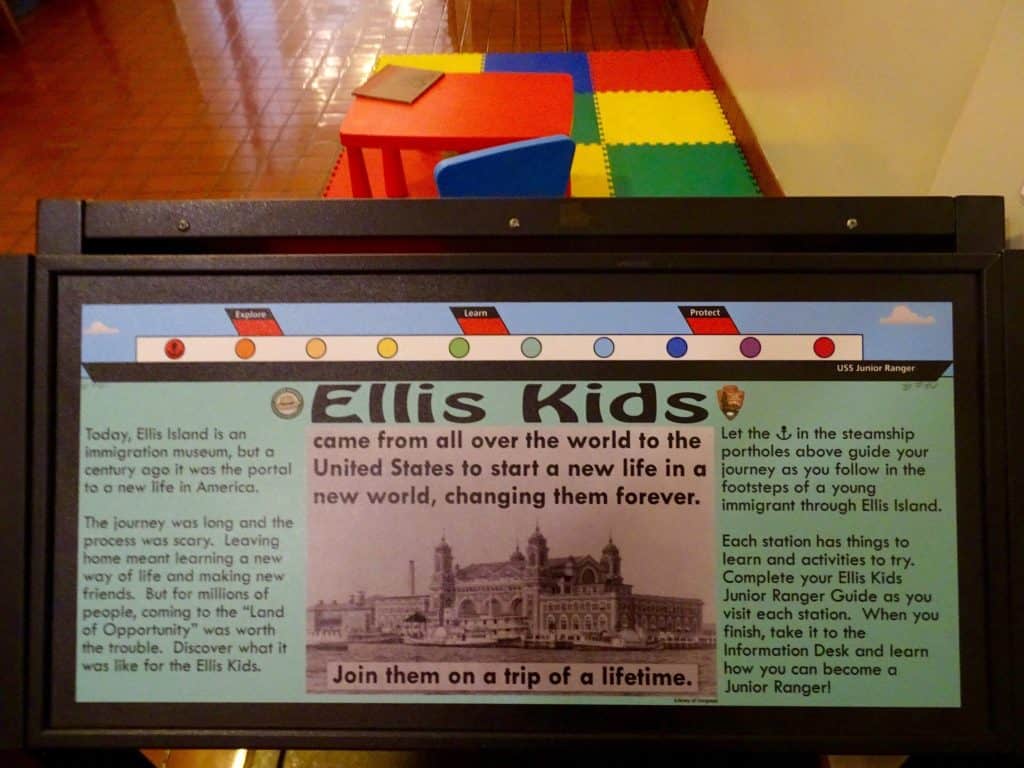
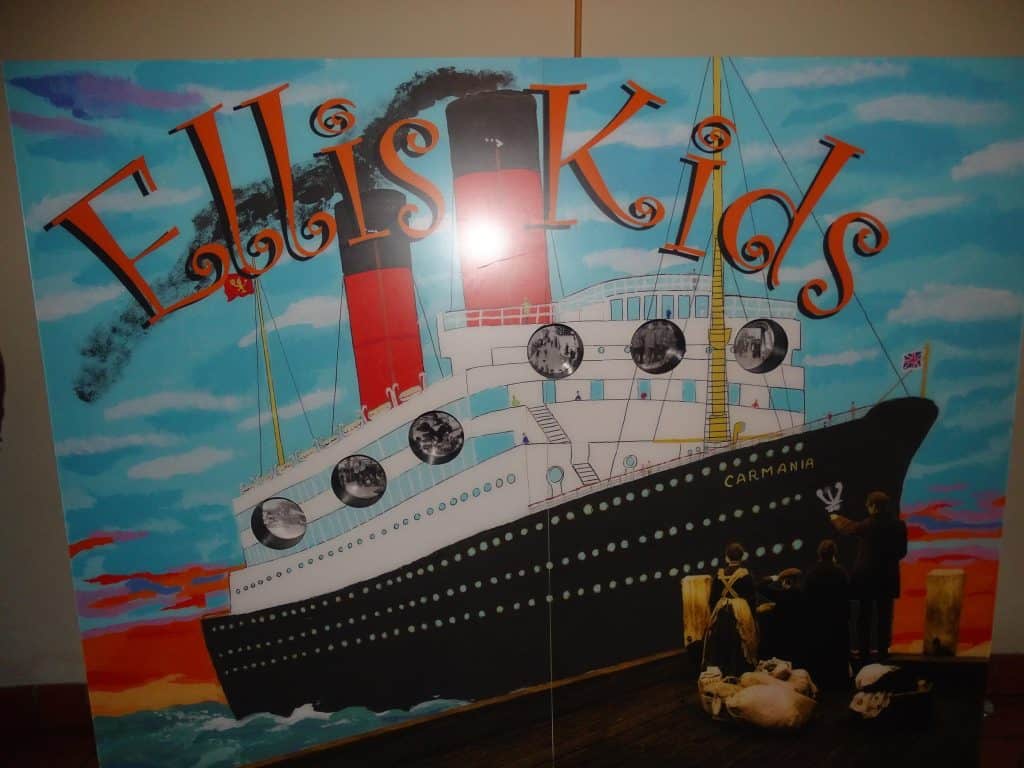
- There is a small area on the first floor called Ellis Kids with a padded area for toddlers to play, a table and chairs to sit and read, and some information for children.
- I’d plan on spending at least two hours for a general tour of Ellis Island, but you’ll need at least 4-5 hours to fully explore every exhibit, watch a couple of films, and take a ranger led program.
- You can purchase food from the Ellis Island Cafe. There is both indoor and outdoor seating available.
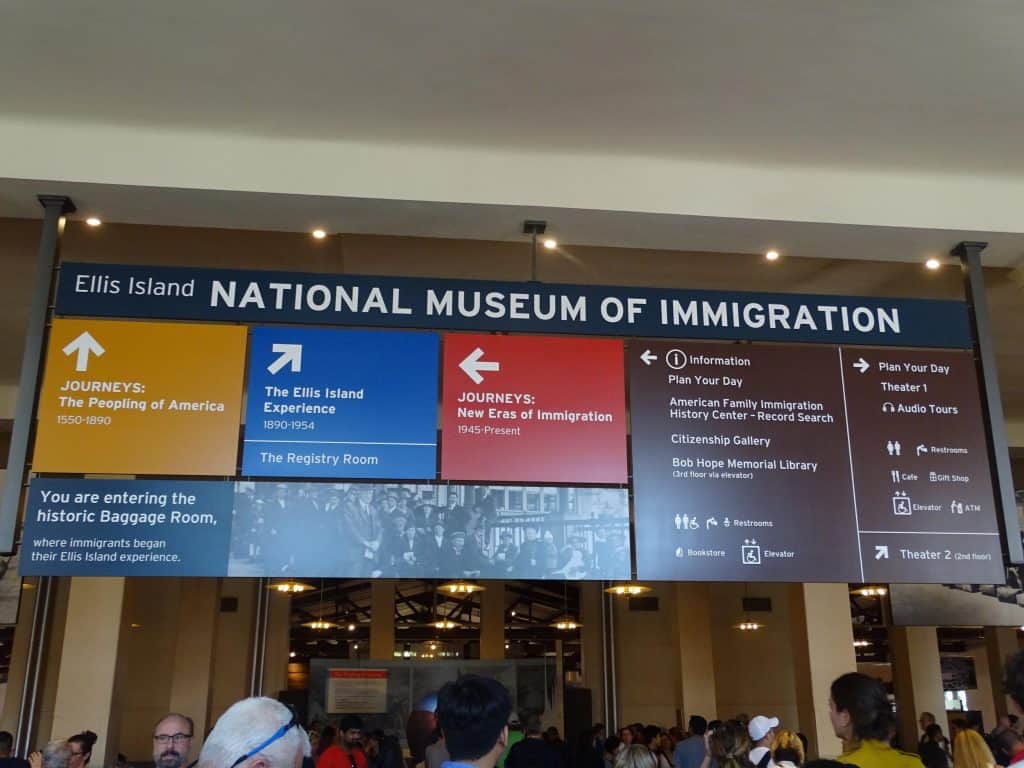
- Souvenirs: The Museum Shop near the main entrance offers souvenirs and gifts to bring home. There is also a bookstore on the first floor near the Baggage Room.
10 Ways to Explore Ellis Island:
1. Listen to an audio tour; it’s included in the ferry ticket price and offers lots of details on the history of Ellis Island and the immigrant experience. Pick up audio tour devices, offered in a dozen languages as well as a child friendly tour, in the main hall. Join a park ranger for a walking tour of the history of Ellis Island. Tour times and frequency vary each day and season. Check here.
Would you like to save this?
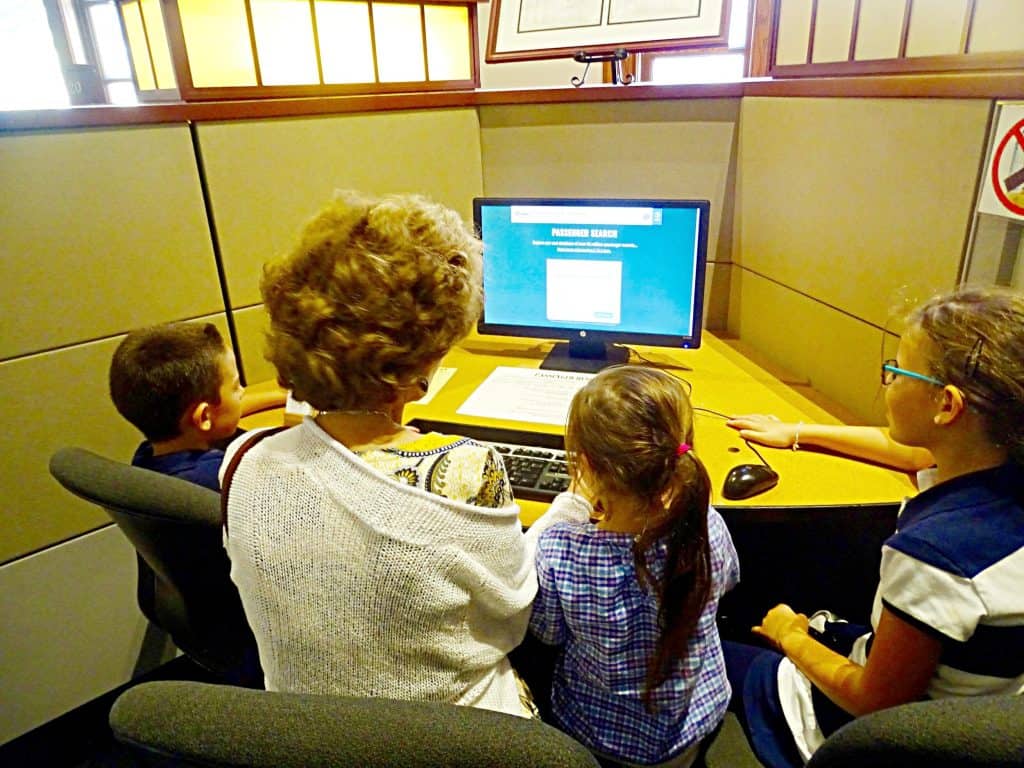
2. Research over 50 million records and find your ancestors who arrived at Ellis Island at the American Family Immigration History Center. There is a $7 fee for a 30 minute session at a research station. Records include ship manifests and pictures of over 900 ships. You can email documents to yourself for free or print on site for an additional fee. (1st floor)
4. View the film “Island of Hope, Island of Tears” in Theaters I and II. The National Parks service presents a 30 minute video narrated by Gene Hackman that gives a good overview and history of immigrant during the 19th and 20th centuries. Both theaters show the film several times throughout the day.
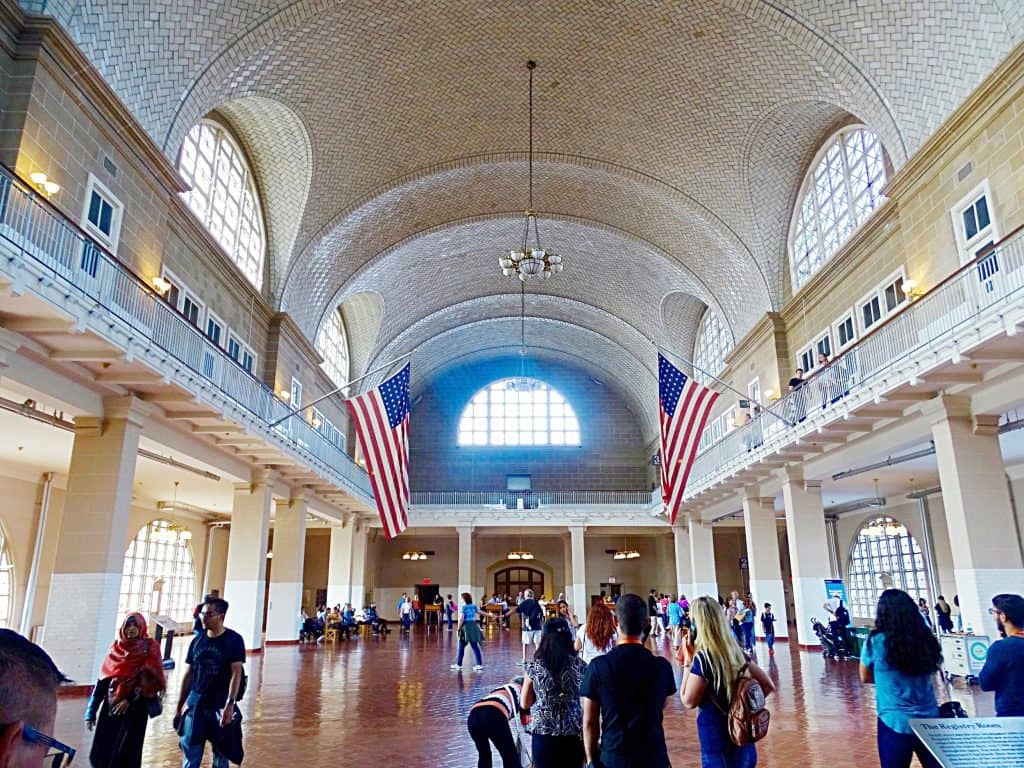
5. Put yourself in the shoes of over 5,000 immigrants who waited in long lines each day from 1900-1925 to be inspected and registered in the Baggage Room which was restored to look actually like it did during that time period. (1st floor)
6. Compare travel times from various parts of the world to America via train or boat or airplane in two Journeys exhibits. The first exhibits chronicles immigration from the 1500s through late 1880s, before the opening of Ellis Island. The second exhibit focuses on the twentieth century through present day.
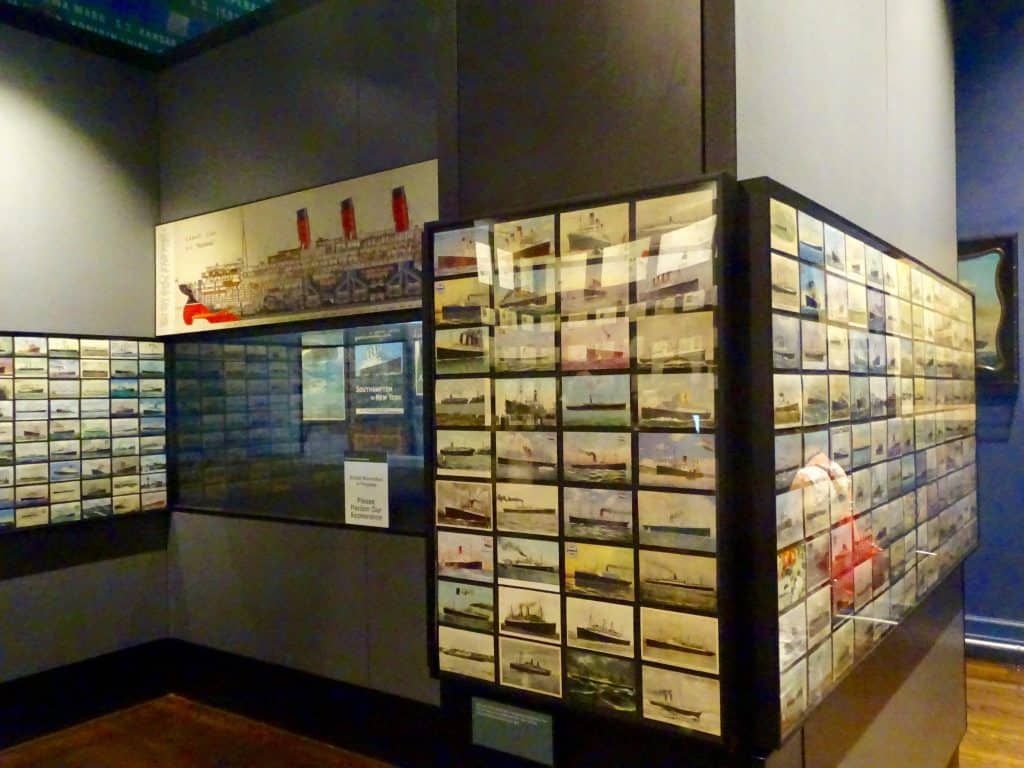
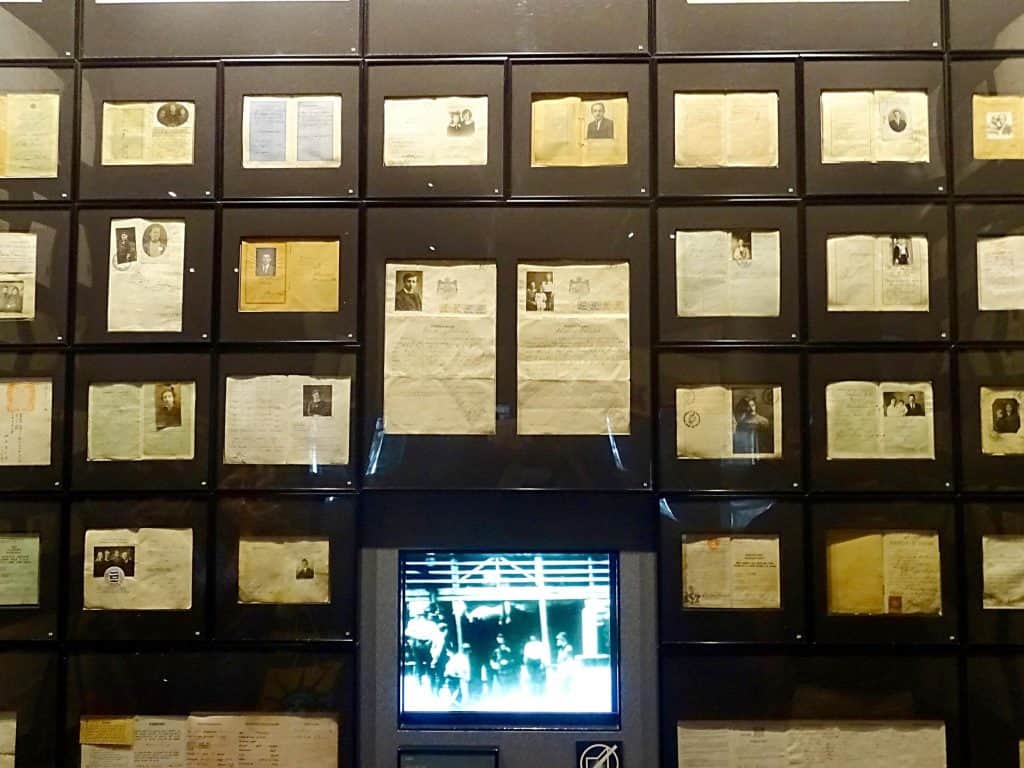
6. Walk through the Peak Immigration Years exhibit (2nd floor) and check out the impressive collection of postcards of the over 900 steamships which brought immigrants to America. There is also a collection of passports from over the 25 nations which were the birthplace of millions of immigrants.
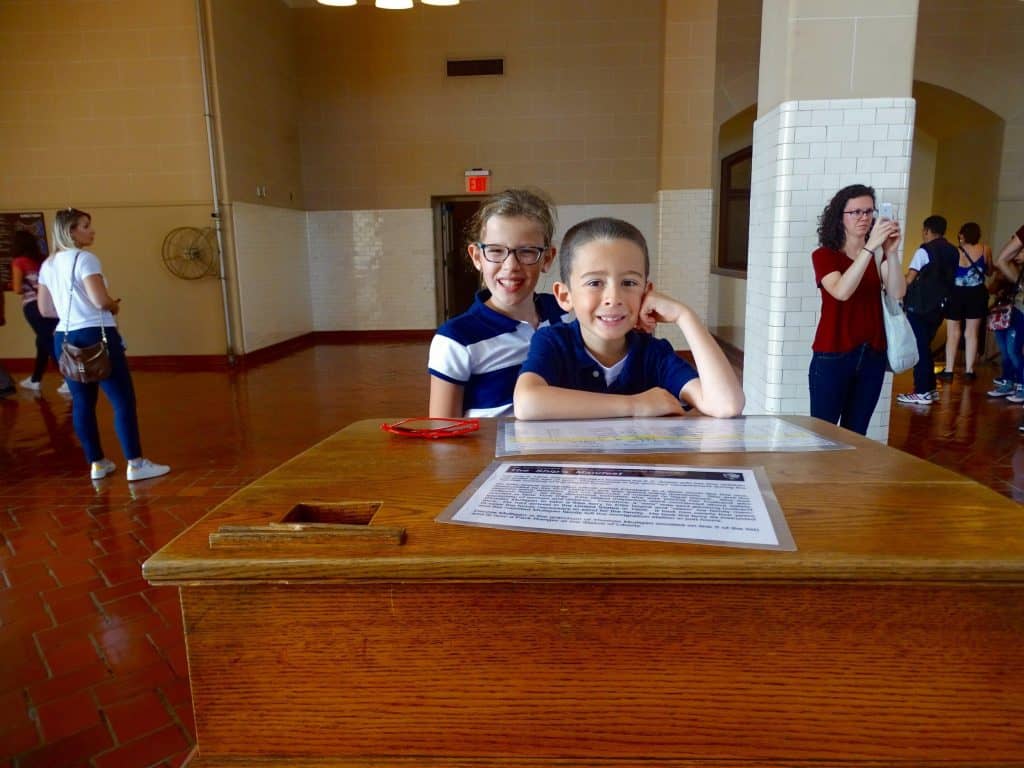

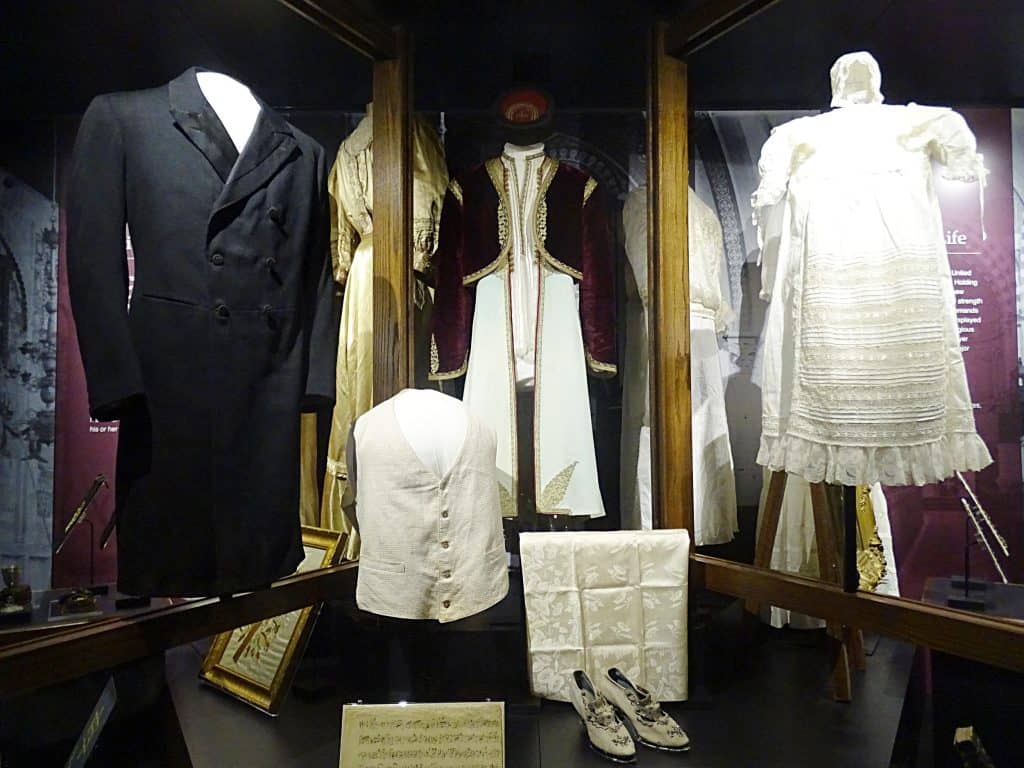
7. Check out the display of over 2,000 artifacts donated by families in the Treasures from Home (third floor) exhibit. The most common objects Italian and eastern European Jewish families (the largest groups of immigrants) would emigrate to America with were Bibles, family documents, and linens. Displays also include wedding dresses and baptismal gowns.
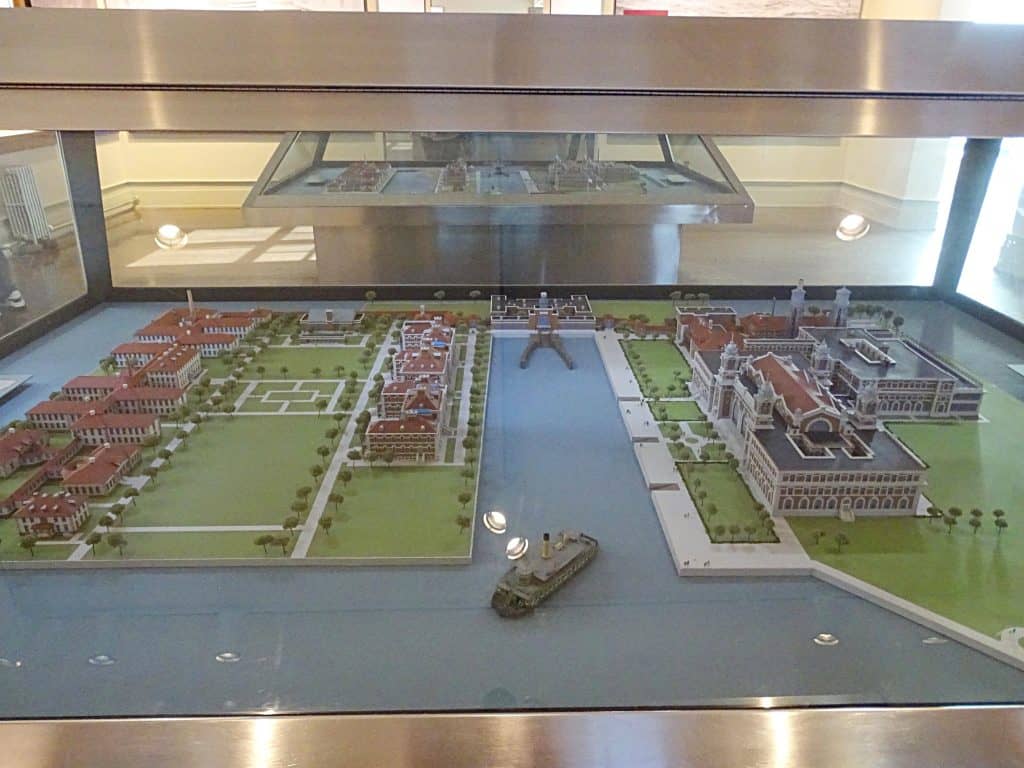
8. Measure the expansion of Ellis Island from a three acre sandbank to a 27 acre complex of buildings shown through 5 miniature display models (built to scale) in the Ellis Island Chronicles (3rd floor) exhibit. The Restoring a Landmark exhibit details the 1980s project to repair and refurbish the complex. (3rd floor)
9. Test your citizenship knowledge in The Citizenship Gallery by reading the exhibit statistics on qualifications for citizenship, ways to become a citizen, and timelines from the late eighteenth century to twenty first century.
10. Earn a junior ranger badge (if you’re a child) and stamp your National Parks passport at the Information Desk in the main hall.
For more lower Manhattan and Financial District fun, check out our full Financial District City Guide and our posts featuring the Fraunces Tavern Museum, Federal Hall National Memorial, the National Museum of the American Indian, Statue of Liberty National Monument, Ellis Island, and Eataly. And follow along on our adventures on Instagram, Pinterest, Facebook, and X.





A wonderful and complete review of everything you need to enjoy this amazing experience for both adults and children.Visiting the Statue of Liberty and Ellis Idland was a heart rendering reminder of the hopes of so many whose dream was to improve their lives. As you explained the Museum was complete in examining so many aspects of the trials and, most important to me, of weaving the traditions of each country into the fabric that is the United States. You have listed everything about this experience to any person or family that would make it a memorable trip.
A wonderful and complete review of everything you need to enjoy this amazing experience for both adults and children.Visiting the Statue of Liberty and Ellis Idland was a heart rendering reminder of the hopes of so many whose dream was to improve their lives. As you explained the Museum was complete in examining so many aspects of the trials and, most important to me, of weaving the traditions of each country into the fabric that is the United States. You have listed everything about this experience to any person or family that would make it a memorable trip.
A wonderful and complete review of everything you need to enjoy this amazing experience for both adults and children.Visiting the Statue of Liberty and Ellis Idland was a heart rendering reminder of the hopes of so many whose dream was to improve their lives. As you explained the Museum was complete in examining so many aspects of the trials and, most important to me, of weaving the traditions of each country into the fabric that is the United States. You have listed everything about this experience to any person or family that would make it a memorable trip.